Progressive Web Apps (PWA) Explained: Can a Website Replace Your Mobile App?
A progressive web app can be installed on a phone, work offline and send notifications — without an app store. Here is what PWAs can and can't do compared with native apps.
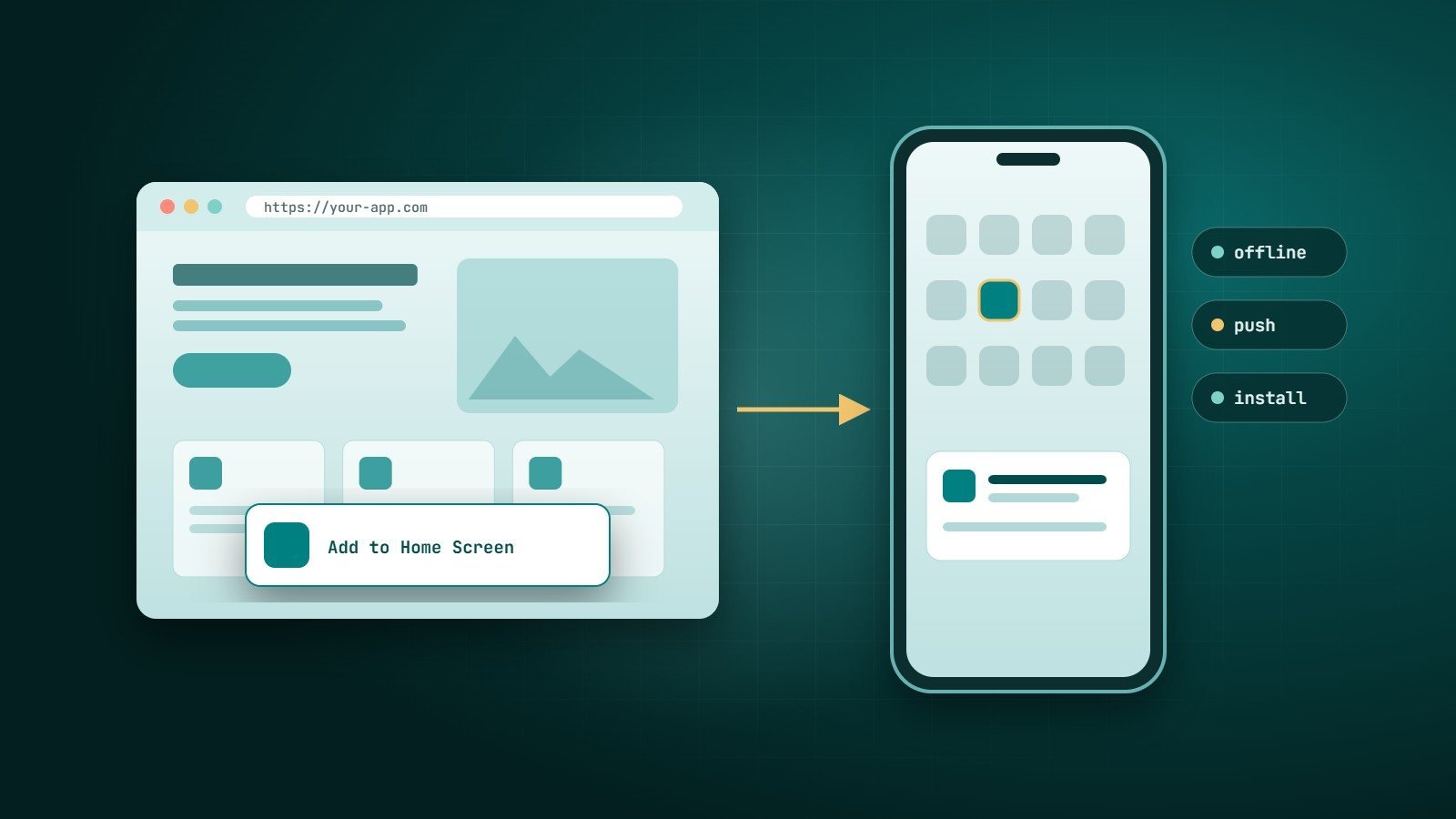
For years, businesses faced a choice: build a mobile website, or invest in separate iOS and Android apps. Progressive web apps (PWAs) offer a middle path — websites that can be installed on the home screen, open in their own window, work offline and, on supported platforms, send push notifications.
What makes a website a PWA
A PWA is a normal website built with standard web technologies, plus three technical ingredients:
- HTTPS — required for the advanced features. See how HTTPS works.
- A web app manifest — a JSON file describing the app's name, icons, colours and how it should open.
- A service worker — a script that runs in the background, sits between the app and the network, and can cache files and data so the app loads quickly and works offline.
{
  "name": "Example Store",
  "short_name": "Store",
  "start_url": "/",
  "display": "standalone",
  "background_color": "#ffffff",
  "theme_color": "#008080",
  "icons": [
    { "src": "/icons/192.png", "sizes": "192x192", "type": "image/png" },
    { "src": "/icons/512.png", "sizes": "512x512", "type": "image/png" }
  ]
}
What PWAs can do
- Install to the home screen and launch full-screen, without browser address bars.
- Work offline or on poor connections, using cached content.
- Load fast on repeat visits, thanks to caching.
- Send push notifications — supported on Android and desktop browsers, and on iPhone and iPad since iOS/iPadOS 16.4 for web apps added to the home screen.
- Use many device features — camera, geolocation, sharing, payments and more, depending on the browser.
- Update instantly — every user gets the latest version without an app store review.
- Be found by search engines, because a PWA is still a website.
PWA vs native app
| PWA | Native app | |
|---|---|---|
| Codebase | One, for all platforms | Per platform (or a cross-platform framework) |
| Distribution | A link; install from the browser | App Store and Google Play |
| Updates | Instant | Through store releases |
| Discoverability | Search engines | App store search |
| Device features | Many, but varies by browser; most limited on iOS | Full access |
| Background work | Limited | Extensive |
| Performance | Very good for most business apps | Best for graphics-heavy or complex apps |
The iOS caveat
Support for PWA features has historically been more limited on Apple's platforms. On iPhone, installation is done through Safari's "Add to Home Screen" rather than an install prompt, and some capabilities available on Android — such as certain background tasks and hardware APIs — are not available. If many of your users are on iPhone and depend on such features, test carefully or consider a native or cross-platform app.
When a PWA is a great choice
- E-commerce, booking, news, content and catalogue apps.
- Internal business tools and field-staff apps that need to work offline.
- Markets where users have limited storage or slow connections.
- Validating an idea before investing in native apps — see building an MVP.
When you need a native or cross-platform app
- Heavy use of device hardware: Bluetooth on iOS, advanced camera processing, sensors, background location.
- Graphics-intensive experiences such as games or AR.
- A strategic need for app store presence.
- Deep integration with the operating system — widgets, background sync, system-level integrations.
Key takeaways
- A PWA is a website with a manifest and a service worker, served over HTTPS.
- It can be installed, work offline and send notifications — with one codebase and instant updates.
- Native apps still win for deep hardware access, heavy graphics and full iOS capabilities.
- For many business apps, a PWA is the fastest, most cost-effective way to reach mobile users.
How Wintecsys can help
We build fast, installable progressive web apps as well as native and cross-platform mobile apps — and we will recommend the approach that best fits your users and budget.