What Is CI/CD? Continuous Integration and Delivery Explained
CI/CD lets teams ship changes several times a day with confidence instead of dreading big, risky releases. Here is how continuous integration and delivery work in practice.
In many teams, releasing software is a stressful event: changes pile up for weeks, someone copies files to the server by hand, and problems appear in production that nobody saw before. CI/CD replaces that with small, automated, repeatable steps.
The three terms
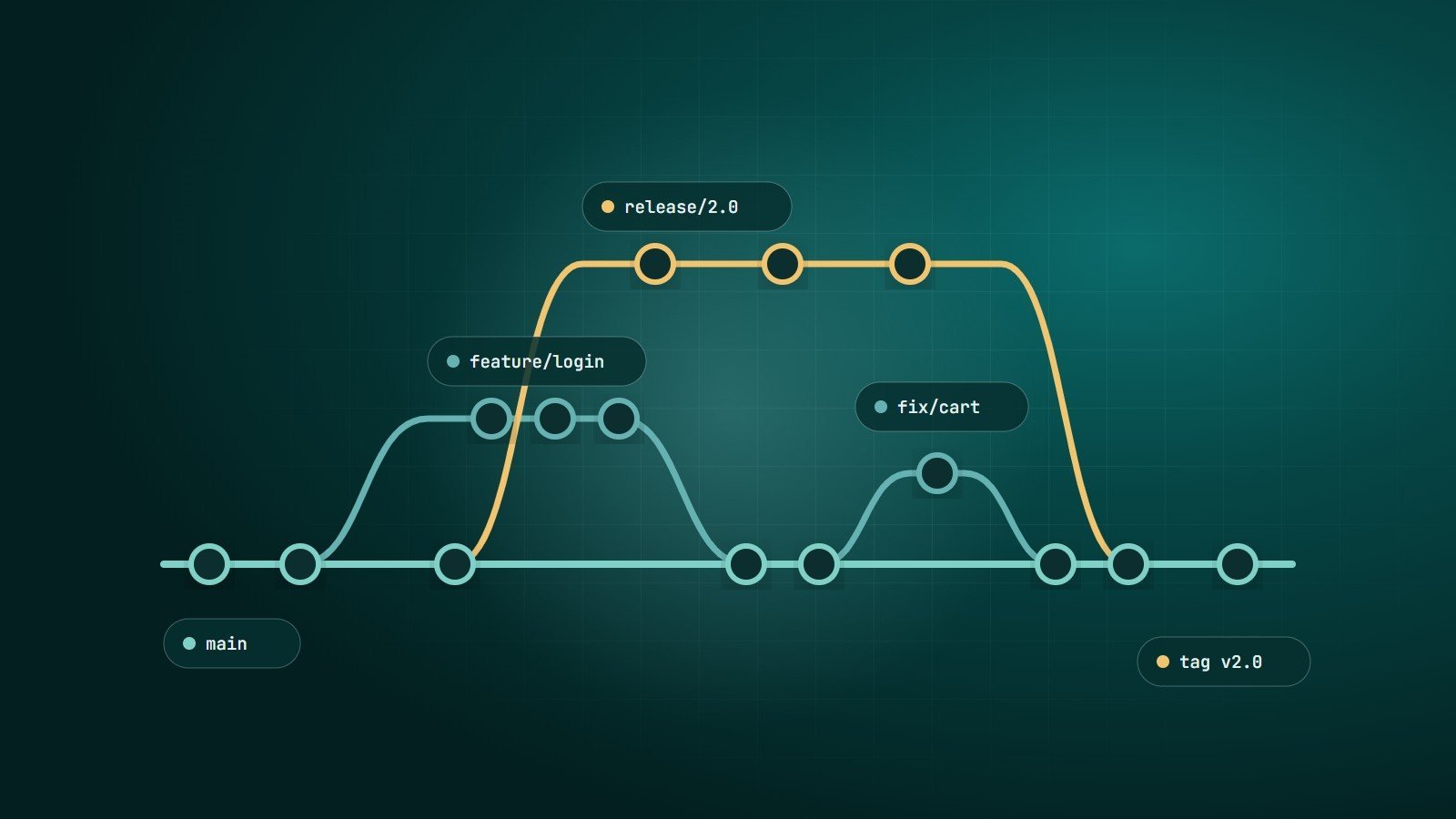
- Continuous Integration (CI) — developers merge their changes into the main branch frequently, at least daily. Every change automatically triggers a build and the test suite, so problems are caught within minutes, while the change is still fresh.
- Continuous Delivery (CD) — every change that passes CI is automatically prepared for release and deployed to a staging environment. Releasing to production is a business decision made with one click.
- Continuous Deployment — goes one step further: every change that passes all checks goes to production automatically, with no manual step.
What a pipeline looks like
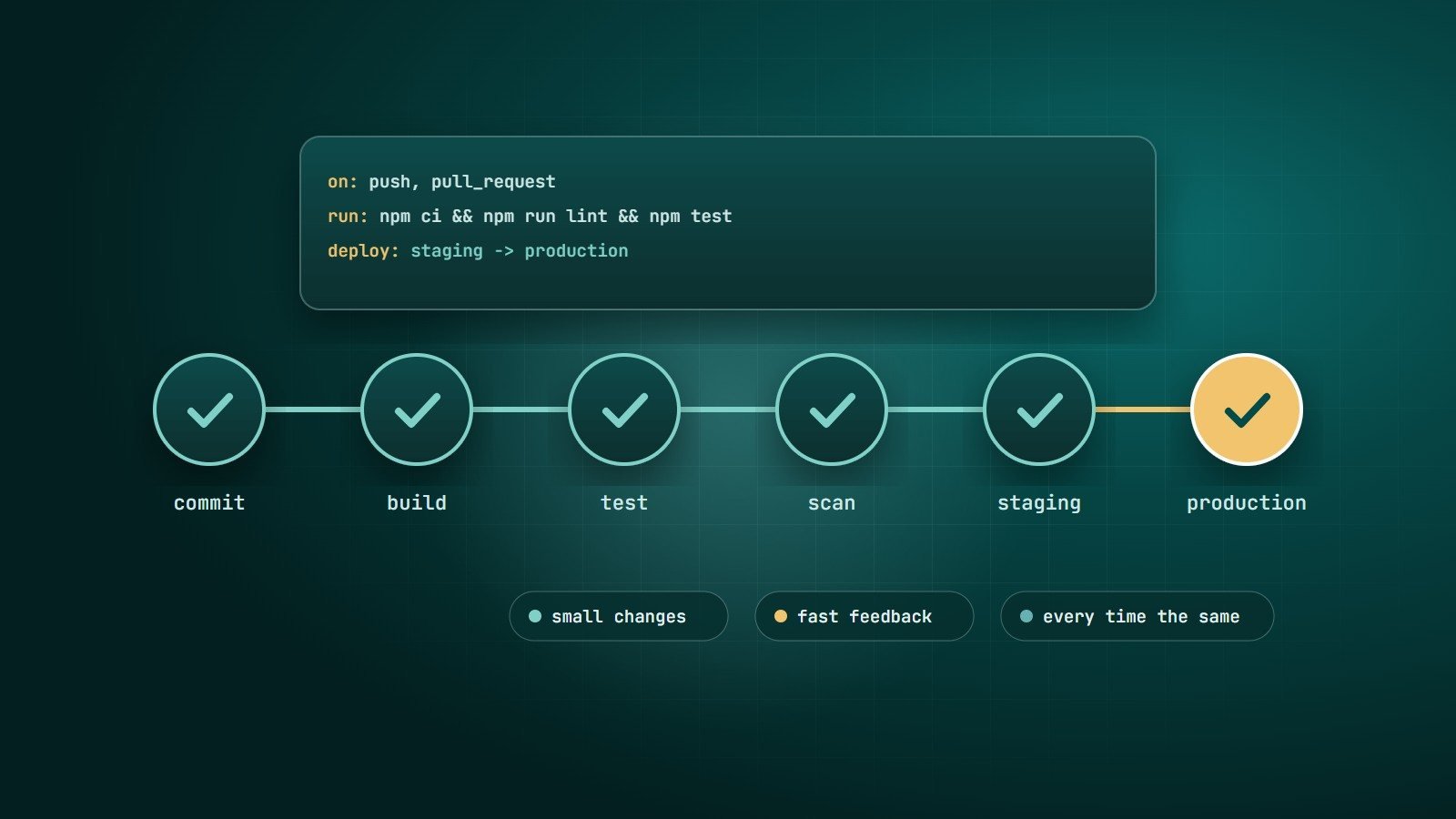
- Commit — a developer pushes code or opens a pull request.
- Build — install dependencies, compile, bundle assets, build a container image.
- Test — unit tests, integration tests, linting and type checks.
- Security checks — dependency vulnerability scanning, secret detection, static analysis.
- Deploy to staging — a production-like environment for final checks and end-to-end tests.
- Deploy to production — automatically or after approval, ideally with zero downtime.
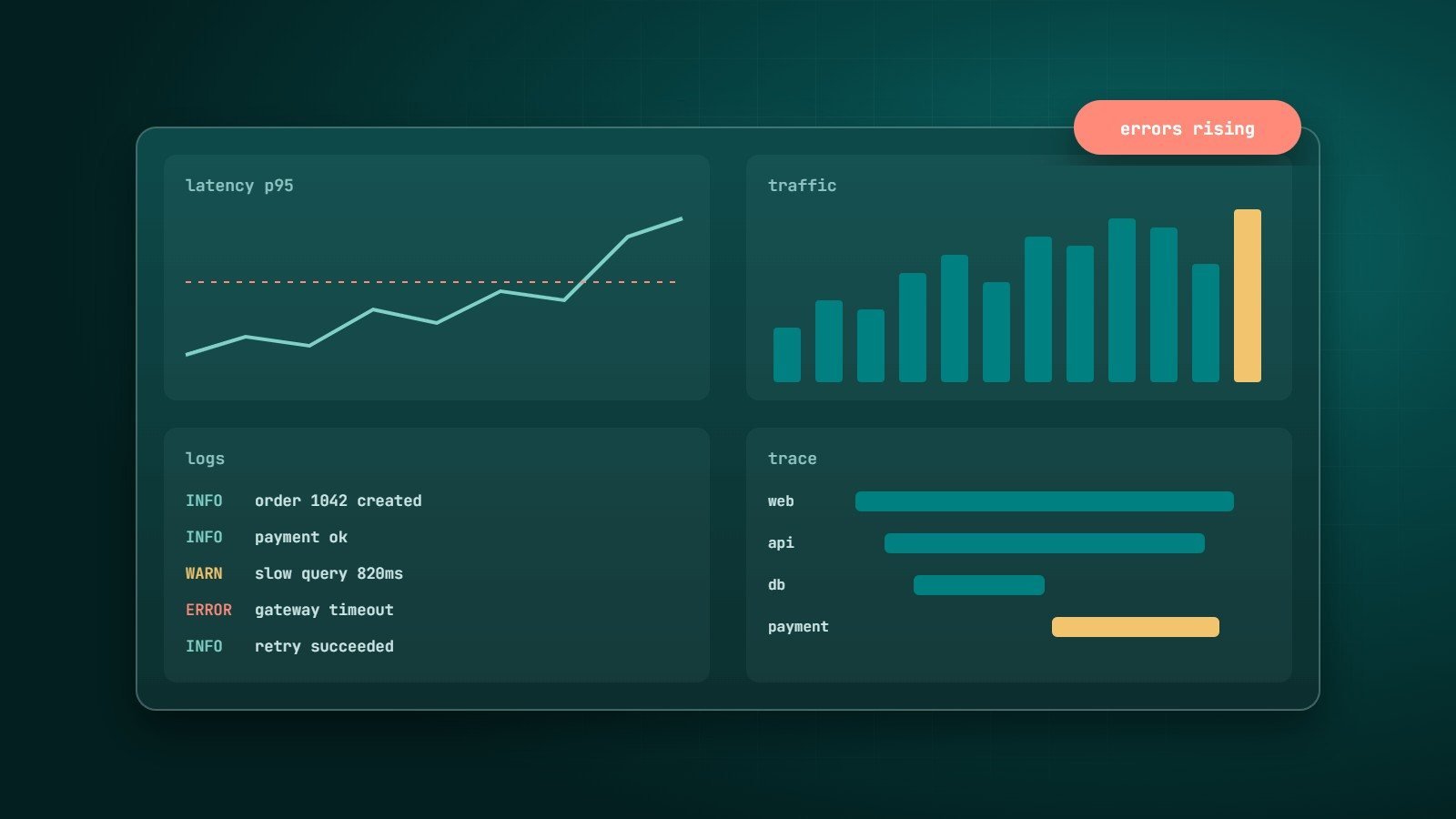
- Monitor — watch errors and performance; roll back quickly if something is wrong.
A simple example (GitHub Actions)
name: CI
on:
  pull_request:
  push:
    branches: [main]

jobs:
  test:
    runs-on: ubuntu-latest
    steps:
      - uses: actions/checkout@v4
      - uses: actions/setup-node@v4
        with:
          node-version: 20
      - run: npm ci
      - run: npm run lint
      - run: npm test
Every pull request now runs linting and tests automatically, and the result appears directly on the pull request before anyone merges.
Popular tools
- GitHub Actions and GitLab CI/CD — built into the code hosting platforms.
- Jenkins — open source, self-hosted and highly extensible.
- CircleCI, Bitbucket Pipelines, Azure Pipelines — hosted CI/CD services.
- Argo CD and Flux — GitOps-style continuous delivery for Kubernetes.
Benefits
- Smaller, safer releases — when each release contains few changes, problems are easier to find and fix.
- Faster feedback — developers learn about broken code in minutes, not weeks.
- Repeatability — the same automated steps every time; no forgotten manual step.
- Quicker value — fixes and features reach users sooner.
The research programme behind the DORA metrics (DevOps Research and Assessment) uses deployment frequency, lead time for changes, change failure rate and time to restore service as key measures of delivery performance — all of which CI/CD directly improves.
Safe deployment techniques
- Blue-green deployment — run the new version beside the old one and switch traffic over; switch back instantly if needed.
- Canary releases — send a small share of traffic to the new version first, then increase gradually.
- Feature flags — deploy code turned off, then enable features for specific users when ready.
- Database migrations designed to be backward compatible, so old and new versions can run during the switch.
Best practices
- Keep the pipeline fast — slow pipelines get bypassed.
- Fix a broken main branch immediately; it blocks everyone.
- Store secrets in the CI system's secret store, never in the repository.
- Build once and promote the same artifact through staging to production.
- Invest in tests gradually, starting with the most critical flows.
Key takeaways
- CI integrates and tests every change automatically; CD keeps every passing change ready to release.
- Pipelines build, test, scan, deploy and monitor — the same way every time.
- Smaller, frequent releases are safer than big, rare ones.
How Wintecsys can help
We set up CI/CD pipelines, automated tests and zero-downtime deployments for web applications, APIs and mobile apps — so your team can release with confidence.
See our cloud & DevOps services or automate your deployments.